
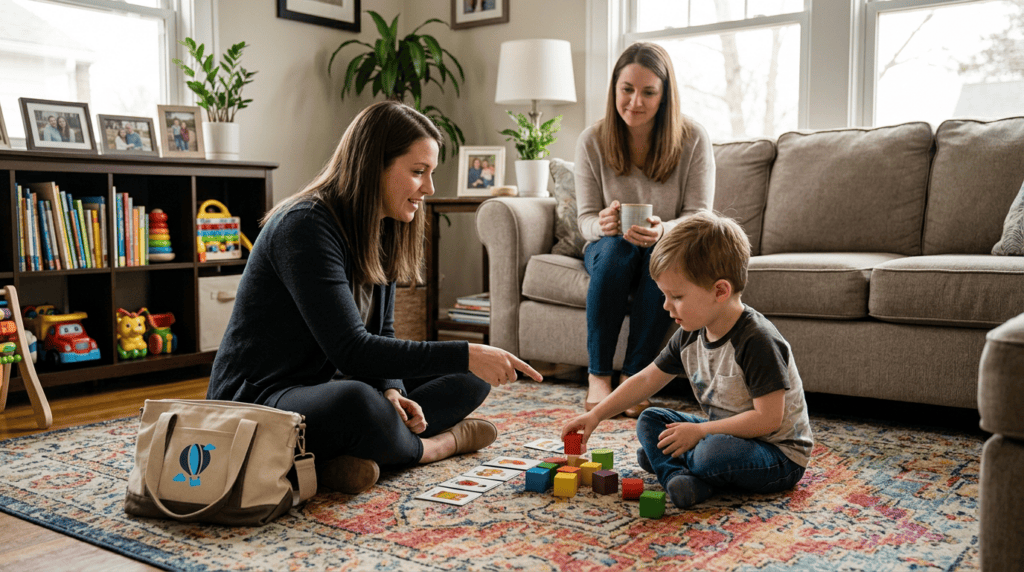
From your first phone call to your child’s first session: what actually happens, and when.
September 22, 2026
Most families looking into ABA therapy in Utah aren’t stuck on whether they want it. They’re stuck on what happens from wanting ABA to actually starting the therapy process.
This guide walks through EverReach’s real intake process for in-home ABA therapy in Utah, the same sequence every family we serve in Salt Lake County and Utah County goes through, so you know exactly what to expect from the first moment on.
What Is ABA Therapy? How In-Home ABA Works
ABA therapy is a structured approach to helping children build useful skills and make progress in everyday life. A Board Certified Behavior Analyst, or BCBA, develops an individualized treatment plan based on your child’s needs, while therapists work on specific goals and track progress over time.
With in-home ABA therapy, that work happens in the environment where your child’s everyday routines and challenges naturally occur. Sessions can address communication, play, transitions, following directions, social interaction, self-care, and other practical skills.
ABA therapy in Utah, the way we deliver it, happens in your home. A therapist comes to you and works with your child in the place where their day actually happens. Their routines, transitions, people, and the space your child already knows are all part of the environment.
That’s how we’ve built our program: around in-home ABA therapy rather than a clinic model. There’s nothing to drive to and no waiting room, and your therapist gets to know your family in the setting you actually live in.
Who’s involved? A Board Certified Behavior Analyst, or BCBA, builds your child’s program and oversees it. Your therapist delivers the day-to-day sessions and keeps notes on how things are going. Your BCBA reviews that information and adjusts the plan as your child grows.
When do sessions happen? Schedules are built around your family. Session length and frequency come out of the evaluation and a conversation with you. Families with school-age children often land on after-school hours. Families with younger children often prefer mornings.
ABA Therapy Examples: What Sessions Can Look Like at Home
ABA therapy looks different from child to child because goals are based on individual needs. At home, a therapist may work with your child on communication, requesting something they want, following directions, transitioning between activities, playing and taking turns, interacting with other people, or building everyday independence.
For example, a session might include practicing how to ask for a favorite toy, moving from one activity to another, taking turns during play, cleaning up after an activity, or practicing another daily routine.
These in-home ABA therapy examples show how therapists can work on communication, transitions, play, and everyday independence skills during regular activities.
The goal is not for every session to look the same. Your therapist works on the skills in your child’s treatment plan while adapting activities to your child’s interests, abilities, and progress.
Medicaid and In-Home ABA Therapy in Utah
For many of the Utah families we serve, ABA therapy is covered through Medicaid. If you have Utah Medicaid, ABA therapy may be within reach for your family, and finding out what your plan covers starts with a conversation.
We handle the coverage side. You tell us what you have during the intake call, and we take it from there, checking your benefits, submitting what needs submitting, and following up with your insurance so you’re not the one chasing anybody.
Commercial plans too. We also work with families covered through private insurance. The process below is similar either way; the paperwork and authorization requirements can differ by plan.
The EverReach Intake Process: What Happens and When
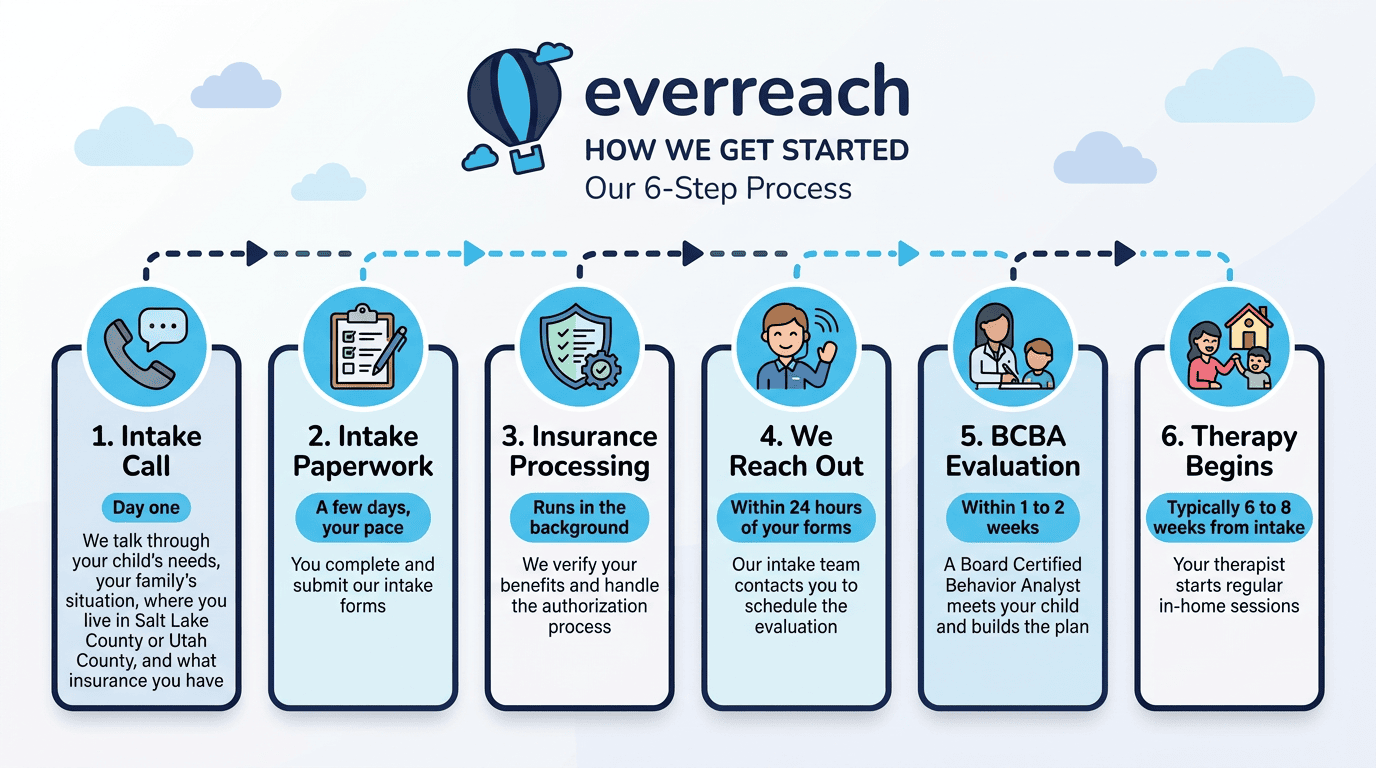
| Step | What happens | Typical timing |
|---|---|---|
| 1. Intake call | We talk through your child’s needs, your family’s situation, where you live in Salt Lake County or Utah County, and what insurance you have. | Day one |
| 2. Intake paperwork | You complete and submit our intake forms. | A few days, your pace |
| 3. Insurance processing | We verify your benefits and handle the authorization process. | Runs in the background |
| 4. We reach out | Our intake team contacts you to schedule the evaluation. | Within 24 hours of your forms |
| 5. BCBA evaluation | A Board Certified Behavior Analyst meets your child and builds the plan. | Within 1 to 2 weeks |
| 6. Therapy begins | Your therapist starts regular in-home sessions. | Typically 6 to 8 weeks from intake |
From your first call to your child’s first session is usually six to eight weeks, and the largest piece of that is insurance processing, which moves at your insurance company’s pace. Some families start sooner.
Step 1: The Intake Call
This is a conversation, not a screening. We want to understand what’s going on for your child and for your family, the things that are hard right now, the things you’ve already tried, and what a difficult afternoon looks like at your house.
We’ll cover the practical pieces too: where in Utah you’re located, what insurance you carry, your child’s age, and whether you already have an autism diagnosis in hand.
Step 2: Intake Paperwork
You’ll complete our intake forms. They cover your child’s history, your contact and insurance details, and consent for us to begin working on your behalf.
Step 3: Insurance Processing
We send the plan to your insurance for approval and handle the back-and-forth from there.
Step 4: We Reach Out Within 24 Hours
Once your forms are in, our intake team contacts you within 24 hours to schedule the initial evaluation.
Step 5: The Initial BCBA Evaluation
A Board Certified Behavior Analyst meets with you and your child, usually within one to two weeks of scheduling.
The evaluation is how your child’s program gets built. The BCBA spends time with your child, talks with you about your priorities, and gets a picture of where your child is doing well and where they need support.
Step 6: Therapy Begins
Once that approval comes through, your therapist starts regular in-home sessions.
The first few sessions are largely about your child getting comfortable with their therapist. See what to expect during your child’s first in-home ABA session.
What Support Looks Like After You Start
Weekly BCBA supervision. Your Board Certified Behavior Analyst is involved every week, reviewing how sessions are going, supporting your therapist, and adjusting the plan as your child progresses.
Monthly check-ins with your family, at minimum. Our admin team stays in regular contact. At least once a month you’ll have a real conversation about how things are going.
Communication whenever you need it. Between scheduled check-ins, you can reach us. Questions about a hard week, a schedule change, or a concern about progress do not need to wait for a calendar slot.
Progress you can actually see. Your child’s goals are written down and tracked. See how ABA progress data is collected.
Parent Training Is Part of the Program
Your child spends far more hours with you than with any therapist, and that’s exactly why parent training is one of our core services in Utah.
We teach you the strategies your child’s team is using, so the same approach carries through bedtime, the grocery store, and Sunday afternoon. Reinforcing ABA strategies at home is where much of a child’s real progress gets built.
In-Home ABA Therapy in Salt Lake County and Utah County
Our Utah ABA services are centered in Salt Lake County and Utah County, the two areas where our teams are most established. If you’re in Salt Lake City, Provo, Orem, West Valley City, Sandy, Lehi, or the surrounding communities, you’re in our core service area.
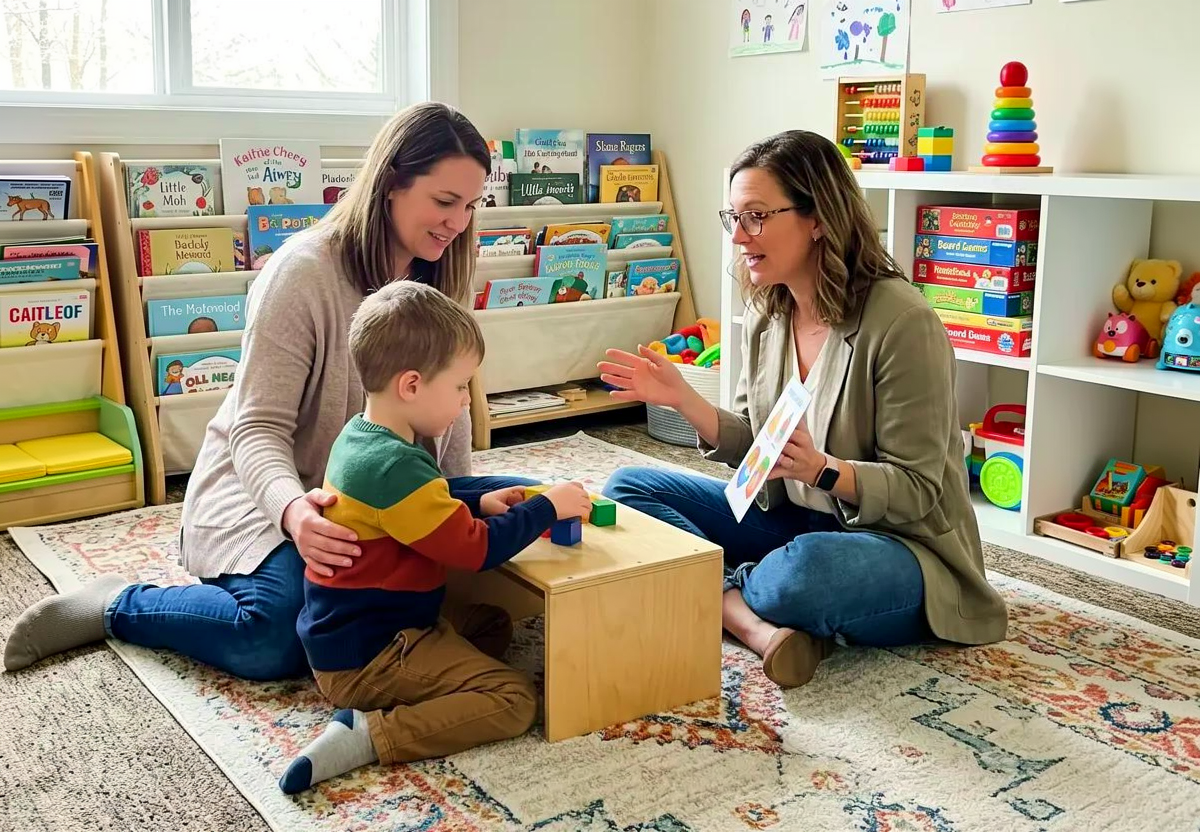
If you’re searching for in-home ABA therapy near you, the key difference is that the therapist comes to your home rather than asking your family to travel to a clinic. Sessions take place in the environment where your child’s everyday routines happen.
Our Utah office is at 10 W Broadway, 7th Floor, Salt Lake City, UT 84101.
If you’re elsewhere in Utah, we’d still love to hear from you. Call and we’ll let you know right away whether we can serve your area.
If You Don’t Have an Autism Diagnosis Yet
You don’t need to have everything figured out before calling us.
If your child hasn’t been evaluated, that’s a common place to start, and we help Utah families with it. We connect families with qualified psychologists in our network who perform child autism evaluations, matched on your location, your insurance, and who actually has availability.
See our guide to autism evaluation and diagnosis in Utah for how that works.
If You’re Not Sure What Your Coverage Means
Cost is the reason a lot of parents never make the call at all, and it’s usually the wrong reason to stop.
Our team verifies your benefits as part of intake, so you get a real answer about your own plan. See Medicaid and in-home ABA therapy in Utah for what we check, what you’ll need on hand, and how long the coverage side takes.
Start ABA Therapy in Utah
One conversation is all it takes to find out where your family stands. We’ll verify your benefits, explain your options in plain language, and give you a realistic start date.
Book a free consultation or call (801) 528-6308. You can also reach us at info@everreachaba.com.
Learn more about ABA therapy in Utah and our services.
Common Questions About Starting ABA Therapy in Utah
How much does ABA therapy cost in Utah?
Out-of-pocket costs depend heavily on your specific health insurance coverage. Many families in Utah access services through Medicaid. For private insurance plans, copays and deductibles may apply. Our team verifies your benefits during intake to give you exact information for your plan. You can learn more in our detailed guide on Medicaid and in-home ABA therapy in Utah.
Does Utah Medicaid cover in-home ABA therapy?
Utah Medicaid may cover in-home ABA therapy for eligible children diagnosed with autism spectrum disorder when services meet the plan’s requirements. We verify your benefits and authorization requirements before therapy begins. Contact our team to verify your specific coverage.
How many hours of ABA therapy per week will my child need?
Weekly hours vary based on your child’s needs, treatment goals, clinical recommendations, and family circumstances. The exact recommendation comes from your Board Certified Behavior Analyst after the initial assessment.
What ages qualify for ABA therapy in Utah?
ABA therapy can be appropriate across early childhood, childhood, and adolescence when clinically appropriate and covered by the family’s plan. Programs are individualized for the child’s age, skills, and goals.
How long does it take to start ABA therapy in Utah?
It usually takes six to eight weeks from your initial contact to the first session. The timeline can include intake paperwork, the BCBA assessment, insurance processing, and authorization.
Do I need an official autism diagnosis before starting?
Insurance coverage for ABA generally requires documentation of an autism diagnosis and satisfaction of the plan’s eligibility requirements, but you can reach out to us before you have a diagnosis. If you do not have a diagnosis yet, we connect families with qualified local diagnostic professionals. Read our guide on autism evaluation and diagnosis in Utah.





 Website by

